 Skip to main content
Industry insights | January 22, 2026
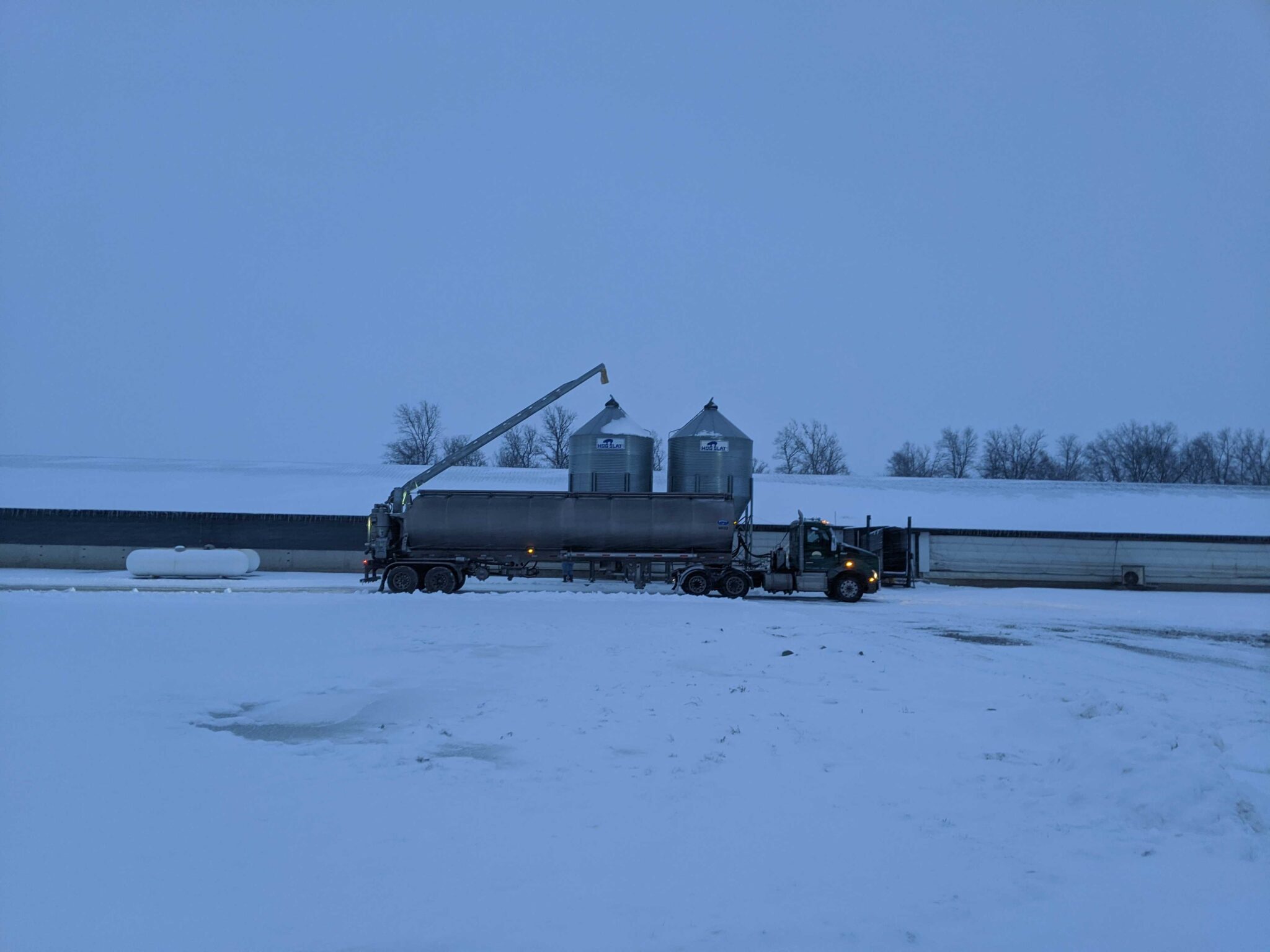
Weather has always been the wild card in agriculture.
In recent years, the supply chain has proven to be fragile as extreme weather events like hurricanes, floods, wildfires and snowstorms have become more frequent, more powerful, and more expensive.
This is especially true for the animal feed sector, which mostly relies on human eyeballs and outdated, inefficient manual processes to run a reactive, low-margin system that moves $120 billion worth of feed between mills and farms across North America every year.
The shortcomings of that system become even more apparent during extreme weather emergencies.
And this is where BinSentry technology truly shines.
When a feed mill is facing a looming weather challenge and the trucks are being pulled off the roads — possibly for days — every single customer calls that mill and says they need to get topped off. It’s a fair request, because they’ve got to take care of their animals and can’t risk running out of feed.
But it’s like a run on a bank. A feed mill can’t possibly deliver to every customer during an emergency. They just don’t have the capacity.
So the feed mills do what they can. But they have no way to prioritize deliveries when everybody is saying “I need feed today” and they have no visibility into what’s really inside the hundreds or thousands of feed bins that they supply.
Climbing bins to guesstimate feed levels is a bad idea at the best of times; during a storm, it’s potentially fatal.
And when the storm has passed and the roads reopen, the same thing happens all over again.
Finally, that’s changing.
BinSentry ’s 3D sensors and AI-powered software eliminate the panic.
BinSentry software takes less than 60 seconds to run a report that identifies which barns are out of feed now and who’s going to be out next.
That report will help the feed mill set the trucking schedule, so that when the trucks start rolling at 5 a.m., their first stops will be at the farms that are really out of feed.
If other farms can wait a few more hours, that’s worth knowing.
BinSentry sensors and software can tell you that almost instantly.
In 2024 alone, there were 27 confirmed climate disaster events, each with losses exceeding $1 billion.
The swine and poultry industries operate on thin margins where every penny counts and feeding the animals is by far the largest expense. Running out of feed for any length of time, due to storms or any other reason, can be the difference between profits and losses.
Deploying new digital technologies will not only bolster the system during emergencies, it will lower costs, reduce waste, optimize logistics and take the guesswork out of feed inventory management during normal times.
And that translates into a stronger, nimbler agrifood supply chain — which is good for everybody.
Want safer, more efficient operations no matter what the weather? Get in touch.